
Land Clearing for Hunting Properties in Mid-Missouri
Shooting lanes, access trails, bedding-edge work and food-plot ground — cut to the routes you flag, in the window that leaves it settled before season.
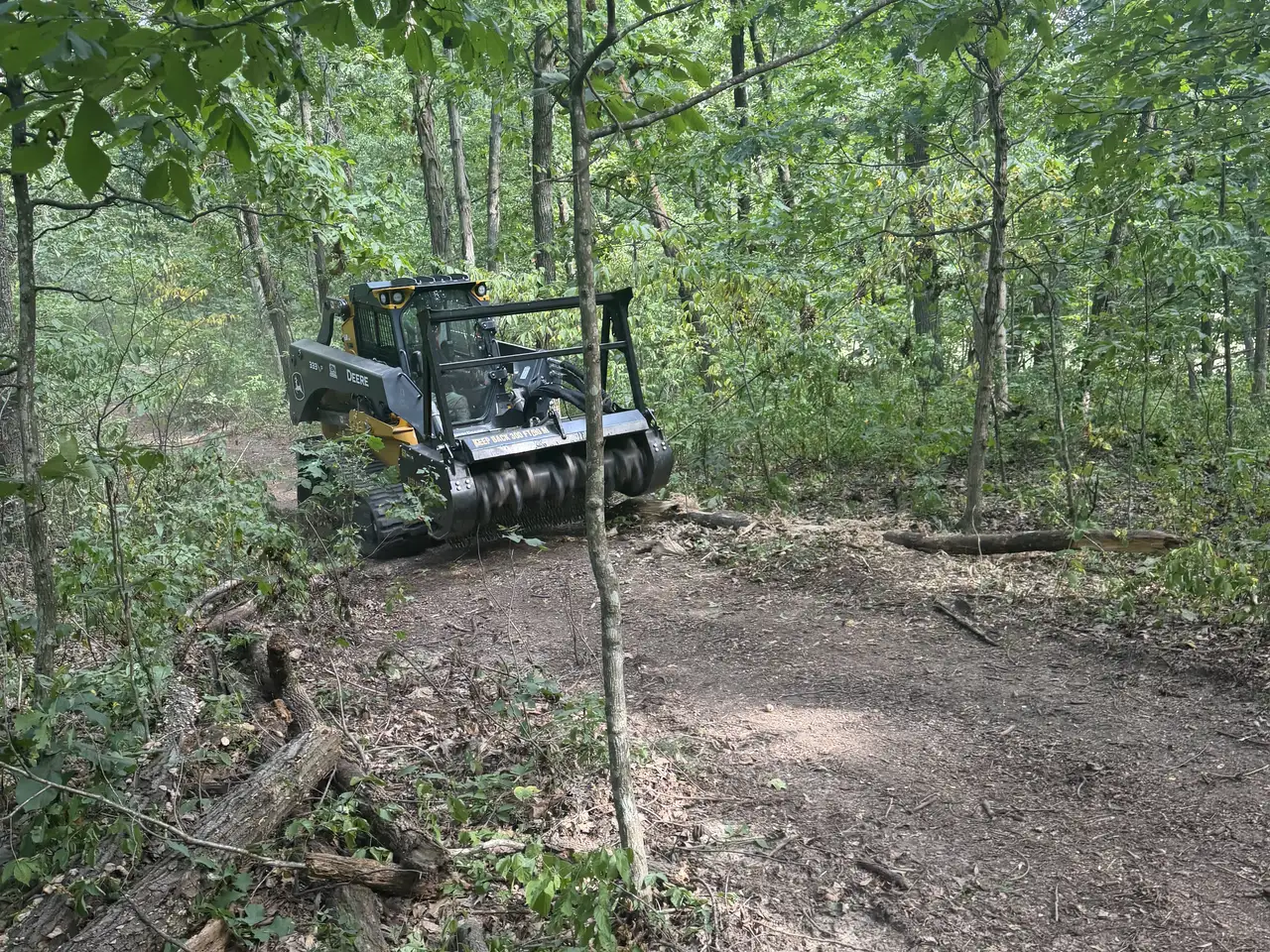
Clearing work on a hunting property is selective rather than total: shooting lanes opened from existing stands, quiet access trails cut to the routes you flag, bedding edges feathered rather than removed, and food-plot ground opened up. Mulching suits all four because it leaves a firm walkable surface and works around the cover you want kept.
Editing a Property, Not Clearing It
On recreational ground the objective is almost never to clear the property. It is to change specific things about it: see further from one stand, get to the back forty without walking through bedding, open a half-acre for a plot, feather an edge that has gone too thick. That is editing, and it needs a machine that can work selectively and an operator following your flags rather than a grid.
Access is usually the first thing worth fixing, because it silently costs you the most. A property you cannot get into quietly, in the dark, with the wind right, is a property you hunt a fraction of. A mulched trail matters here in a way it does not on a farm: the material is ground into the trail surface rather than pushed into berms, so it walks quietly and it holds up on the grades and draws that make up most mid-Missouri timber ground. Route it along a contour, keep a rise between the trail and the bedding, come in downwind — flag the line you actually want and the machine follows it.
Shooting lanes are the second call. Sight lines close in faster than people expect, especially where honeysuckle has got into the understory, and a stand that covered eighty yards five seasons ago may cover thirty now. Lanes get cut from the stand outward, to the width and length that suits how you hunt that spot, which is a decision made from the stand rather than from a map.
Bedding and edge work is the part that rewards restraint. Thick cover is an asset, and the goal on a bedding edge is usually to feather it — take the outer margin back, open the transition, leave the core alone. Mulching handles this because it is selective; the operator works around what you flag as keep.
Food plots need ground opened before they need anything else. Mulching takes the standing brush and saplings off, but a plot you intend to disc or drill wants the root balls out rather than cut flush, which is what small tree pulling is for. Those two are commonly done on the same visit — pulled where the ground has to be clean, mulched everywhere else.
Timing is worth planning around. Late winter and early spring is the window: the leaves are down so the operator can see the standing timber, the ground is firm enough to work without rutting, and everything that gets cut has a full growing season to green up and soften before you hunt over it in the fall. Work done in August is work you are still looking at in November.
Get a Free Estimate
Tell us what you are looking at and we will come walk it.
What This Usually Involves
Trail Clearing
Shooting lanes, ATV and UTV trails, walking paths and access lanes cut through timber at the width you want.
Forestry Mulching
Standing brush, saplings and undergrowth ground down into mulch where they stand. No burn piles, nothing hauled off.
Small Tree Pulling
Small trees and cedars pulled root ball and all where a stump left behind would be a problem later.
Brush Clearing
Fence lines, field edges, ditch banks and pasture reclaimed from honeysuckle, cedar, multiflora rose and volunteer brush.
Hunting Properties — Common Questions
Questions we hear from hunting properties across Boone County and mid-Missouri.
Late winter through early spring. The ground is firm, the leaves are down so the operator can see the timber clearly, and everything cut has a full growing season to green up and soften before fall. Work done close to season is work you are still looking at when you hunt it.
That is the preferred way to do it. You know where the deer move on your ground and where you need to be able to get to quietly. Flag it and the machine follows the flags rather than a line drawn on a map.
Any work on the ground is a disturbance while it is happening. Doing it in late winter, well outside the season, is what gives the property time to settle. Selective work also matters — feathering an edge changes far less than clearing one.
Yes. Mulching takes off the standing brush and saplings. If you intend to disc or drill the plot, the root balls want to come out rather than being cut flush, which is small tree pulling — commonly done on the same visit as the mulching.
It depends on the stand, the range you are comfortable at and how the ground lies. This is a decision worth making from the stand rather than on paper, which is part of what the walk-through is for.
Last updated
Get Your Land Back
Free on-site estimate anywhere in Boone County and mid-Missouri. Walk the property with us and get a real number.
Serving Boone County and mid-Missouri · Estimates by appointment — call or text