Forestry Mulching in Boone County & Mid-Missouri
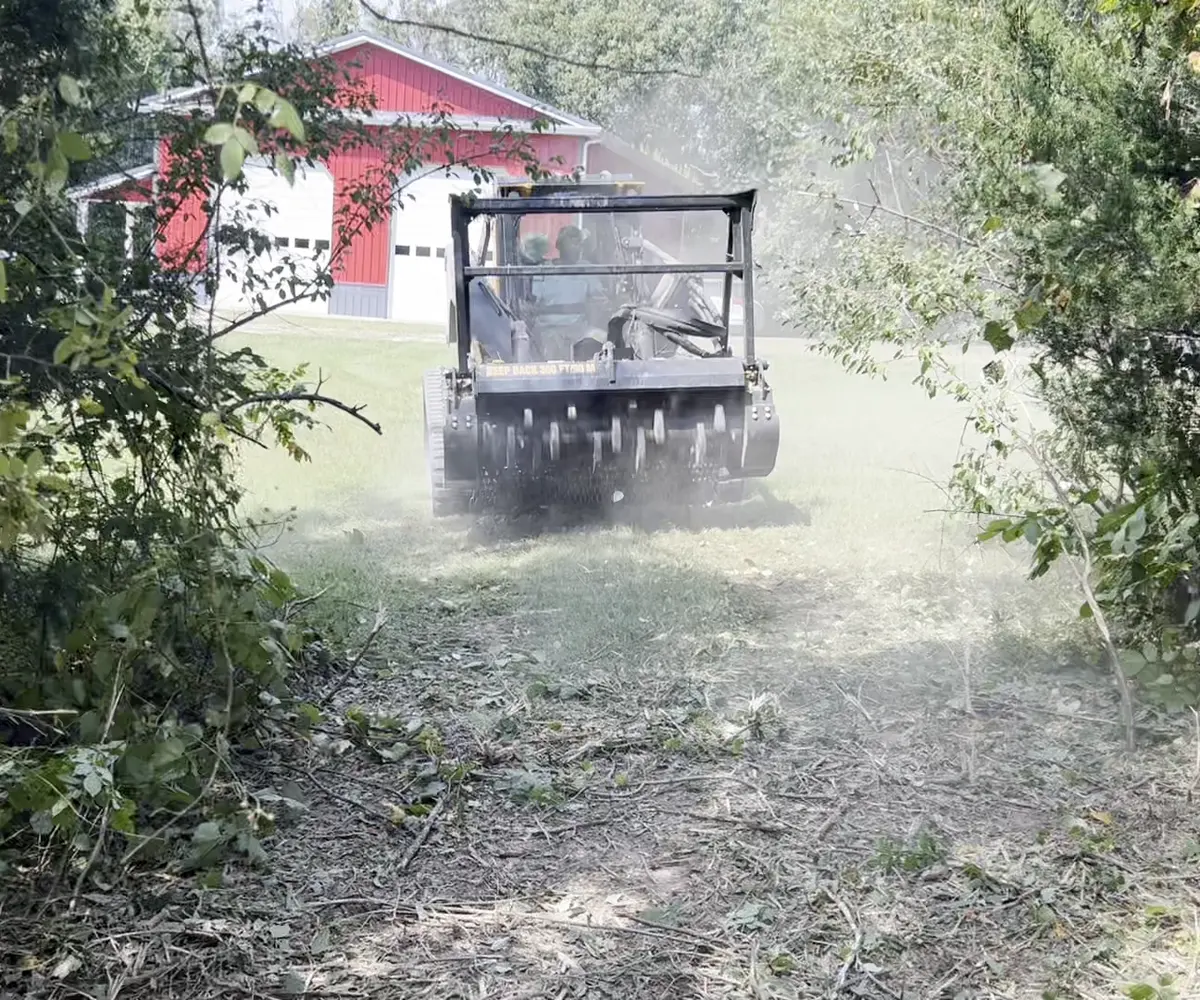
Brush, saplings and cedar ground down into mulch where they stand. Nothing to burn, nothing to haul off, no stump field left behind.
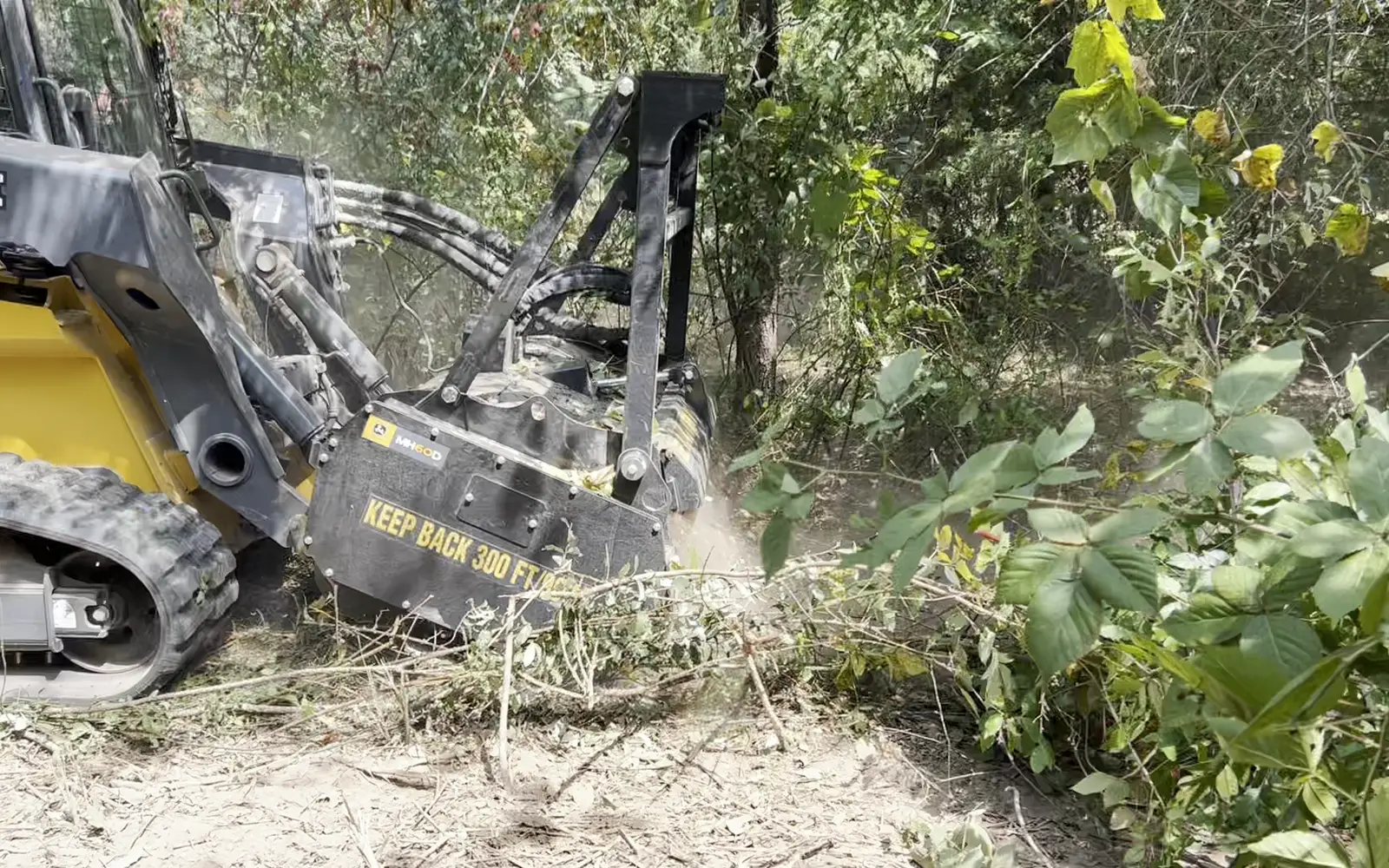
Forestry mulching is a land clearing method where a rotating drum of steel teeth cuts standing vegetation and grinds it into mulch on the spot, leaving the material on the ground as erosion cover instead of hauling it off.
Forestry mulching clears standing brush, saplings and small trees using a machine with a rotating drum of steel teeth. The vegetation is ground where it stands and left as a mulch layer, so there is nothing to burn, pile or haul away. In mid-Missouri it is the standard method for reclaiming cedar and honeysuckle ground.
What Is Forestry Mulching?
Forestry mulching collapses what traditional clearing does in three or four separate steps. Instead of cutting, piling, burning and then grinding stumps, a mulching head cuts the standing material and grinds it down where it stands. What is left is a layer of coarse mulch across the ground and the trees you chose to keep still standing. There is no brush pile, no burn permit and no line of dump trucks.
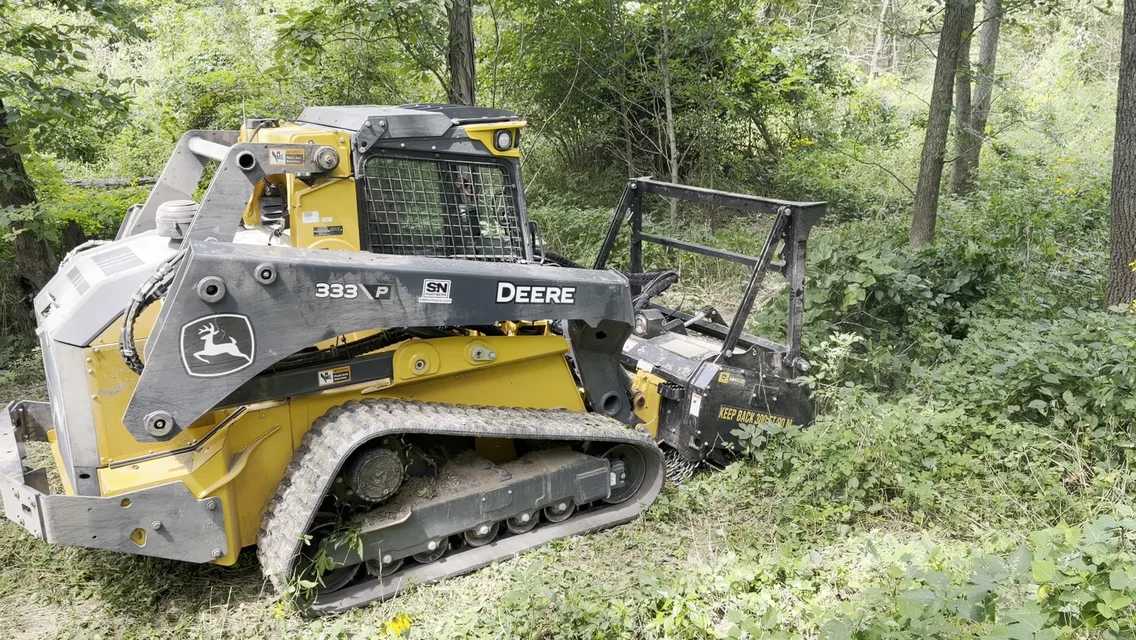
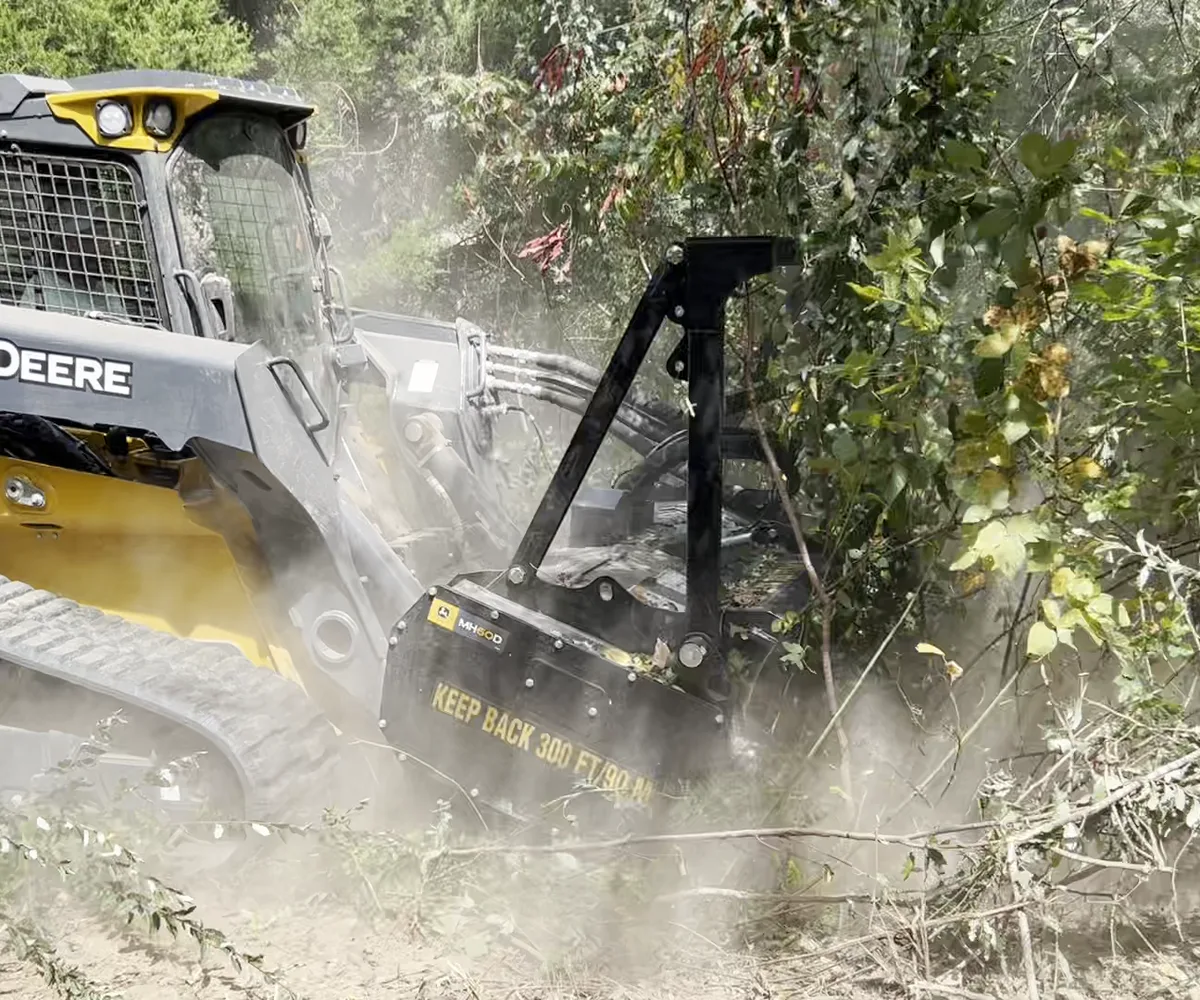
Mid-Missouri ground has a specific problem, and mulching is a specific answer to it. Pasture and timber edge that has been left alone for ten or fifteen years fills in with eastern red cedar, bush honeysuckle and multiflora rose. Cedar shades out the grass underneath it. Honeysuckle leafs out earlier and drops later than the natives around it, so it takes over the understory of oak-hickory timber and turns walkable woods into something you cannot see thirty feet into. Mulching handles all three in one operation.
The mulch layer itself does real work after the machine leaves. On the sloped ground common along the Missouri River bluffs and the creek draws that feed into it, bare soil after a dozer job will move in the first hard rain. A mulch layer holds that soil, breaks the impact of rainfall, and rots down over a season or two into organic matter. On flatter bottom ground it suppresses the next flush of weed growth long enough for grass to get established.
Mulching is also selective in a way that heavy clearing is not. The operator works around what you want kept — a line of white oak along a fence, a shade tree in the middle of a field, the timber edge you want left as a screen. On a hunting property that selectivity is the entire point: you are not clearing the ground, you are editing it.
What mulching does not do is remove root systems. Vegetation is cut at or just above ground level, so a low stump remains where larger stems were. On most acreage that stump is knocked flat enough to mow and drive over and it is a non-issue. Where the ground has to be genuinely clean — a house pad, or ground you intend to till — small tree pulling takes the root ball out instead, and the two are commonly done on the same visit.
Forestry Mulching vs. Traditional Methods
| Factor | Mid Missouri Forestry Mulching | Traditional |
|---|---|---|
| Steps involved | Cut and grind together, on site | Cut, pile, burn, then grind stumps |
| Debris | Stays on site as mulch | Burn piles or hauled to a dump |
| Burn permit | Not needed | Usually required, and weather-dependent |
| Soil disturbance | Minimal — sod and root mat stay intact | Significant; bare soil left exposed |
| Erosion after | Mulch layer holds the slope | Bare ground moves in the first hard rain |
| Selectivity | Keep-trees stay standing | Hard to work around individual trees |
Common Uses for Forestry Mulching
- ✓Pasture and hay ground lost to cedar and honeysuckle
- ✓Oak-hickory timber with an understory you cannot see through
- ✓Fence lines and field edges grown into the field
- ✓Recreational ground being opened back up for hunting or riding
- ✓Acreage being prepped ahead of a sale or an appraisal
- ✓Overgrown lots ahead of a build
Why Choose Forestry Mulching
Nothing to Burn or Haul
The material is ground where it stands and stays there. No burn pile, no burn permit, no dump fees and no waiting on a weather window.
The Ground Stays Put
Sod and root mat are left intact and covered with mulch, which matters on the sloped ground and creek draws common through this part of the state.
You Choose What Stays
Mulching works around individual trees. The white oaks, the shade tree, the screen along the road — flag them and they stay.
Usable Immediately
There is no cleanup phase to wait through. When the machine leaves the ground is walkable, and in most cases mowable.
Our Forestry Mulching Process
We walk the property with you and agree on what comes out, what stays, and where the boundaries of the work are.
You get an estimate before anything starts, based on what is actually standing on the ground rather than an acreage guess.
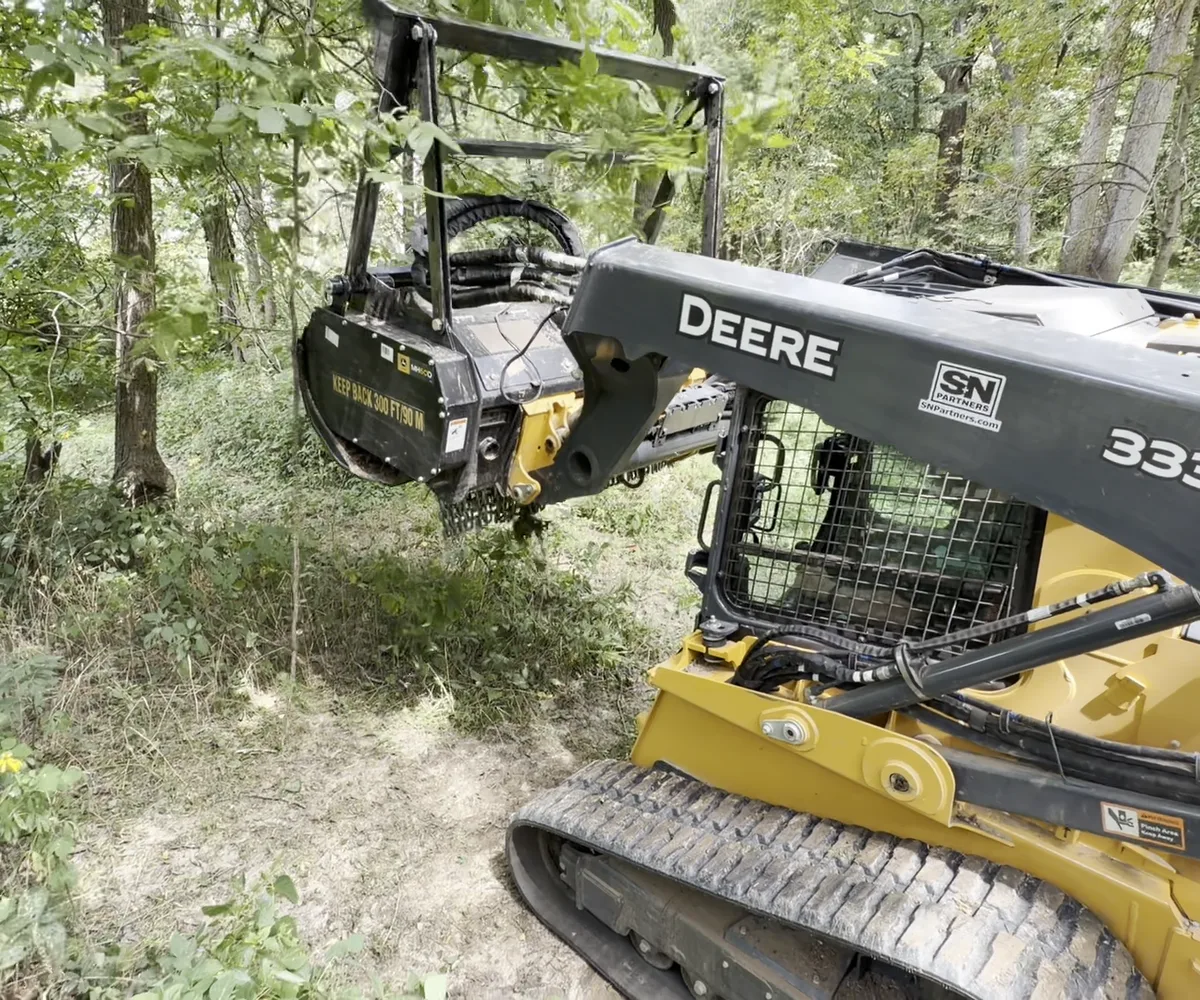
The machine works the area start to finish, grinding standing material down and leaving it as a mulch layer.
We walk it with you before we load out, so anything missed gets handled while the equipment is still on site.
Typical cost:
Exact pricing depends on your property. We provide free on-site estimates.
Forestry Mulching FAQ
Common questions about forestry mulching in Boone County and mid-Missouri.
It cuts at or just above ground level, so a low stump remains where larger stems were. On most jobs that stump is mulched flat enough to walk, mow and drive over. Where the ground has to be completely clean — a building pad, or ground you intend to till — small tree pulling takes the root ball out instead.
It depends almost entirely on stem size and density. Light brush and saplings move fast; a thick cedar or honeysuckle stand with mature stems takes considerably longer per acre. Walking the property is what turns that into a real number, and you get that estimate before any work starts.
Cutting it knocks it down and buys back the use of the ground, but bush honeysuckle and multiflora rose resprout from the stump and will return without follow-up. Cedar does not resprout — once it is cut, it is done. Plan on either a follow-up visit or a herbicide program through your local MU Extension office if you want honeysuckle gone permanently.
Mulching heads are built for brush, saplings and small-diameter stems rather than mature timber. Larger trees are usually better handled separately or left standing. Which category your ground falls into is one of the first things a walk-through settles.
Late fall through early spring is the easiest window. Leaves are down so the operator can see what he is cutting, the ground is firmer, there are no ticks or snakes to work around, and the mulch layer settles over winter. Summer clearing works too — it just takes longer to see through the canopy.
For most private rural acreage in mid-Missouri, no permit is required to clear your own property. That changes near creeks, wetlands and levee districts, inside city limits, and on ground under a CRP contract or a conservation easement. Check with your county and, if a federal program is on the ground, with your local NRCS office before work starts.
Related Services
Last updated
Ready for Forestry Mulching?
Get a free, no-obligation estimate for your forestry mulching project.
Serving Boone County and mid-Missouri · Estimates by appointment — call or text