Brush Clearing in Boone County & Mid-Missouri
Fence lines, field edges, ditch banks and pasture taken back from the brush that has been creeping into them.
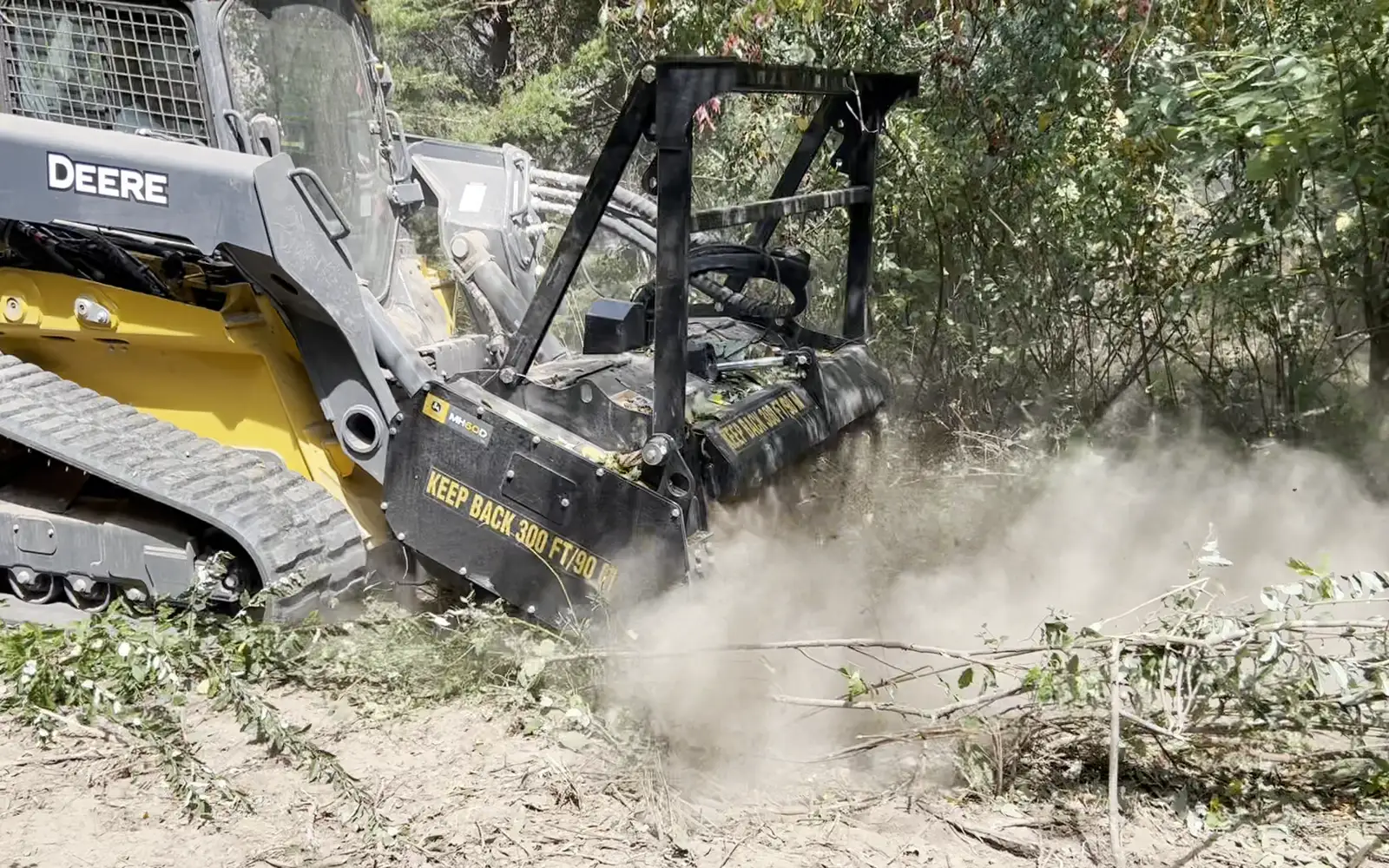
Brush clearing is the recovery of field edges, fence lines and pasture from volunteer woody growth, done by cutting and mulching the material in place rather than pushing it into piles.
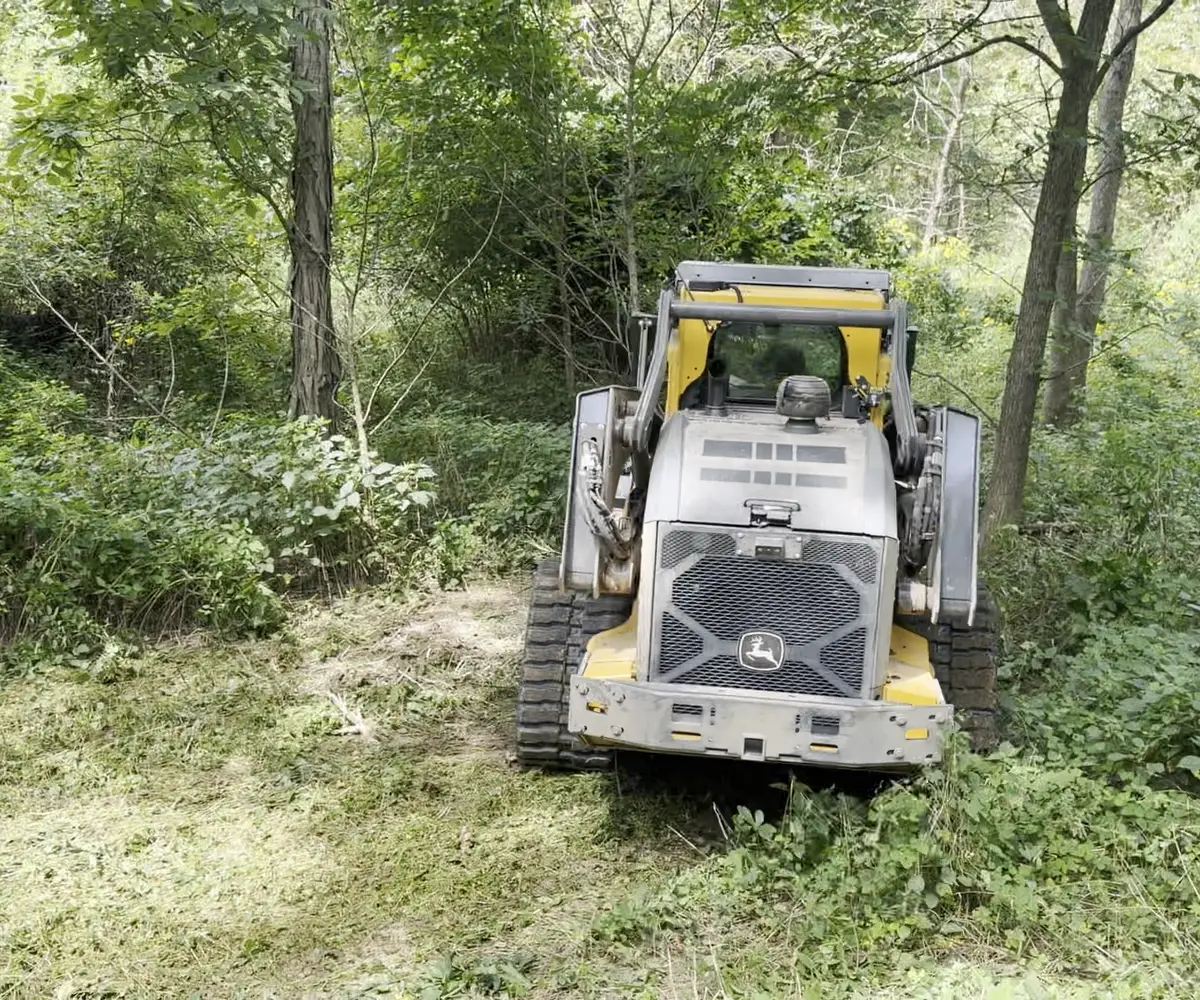
Brush clearing removes volunteer growth — cedar, bush honeysuckle, multiflora rose and blackberry — from fence lines, field edges, ditch banks and pasture. Mulching cuts and grinds the material in place, so the fence stays workable and the sod underneath is left intact rather than torn up.
What Brush Clearing Handles
Brush does not arrive all at once. A fence line loses a foot a year to cedar and honeysuckle, a field edge creeps in, a ditch bank fills with multiflora rose, and after a decade the usable acreage is measurably smaller than the deeded acreage. Brush clearing takes that ground back and puts the edges where they are supposed to be.
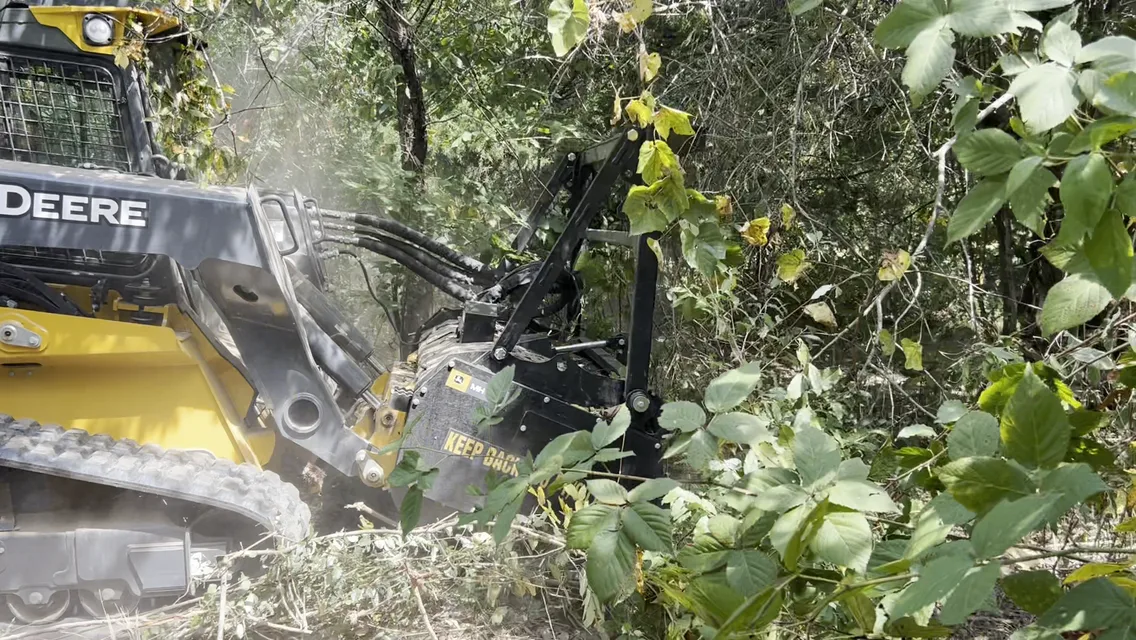
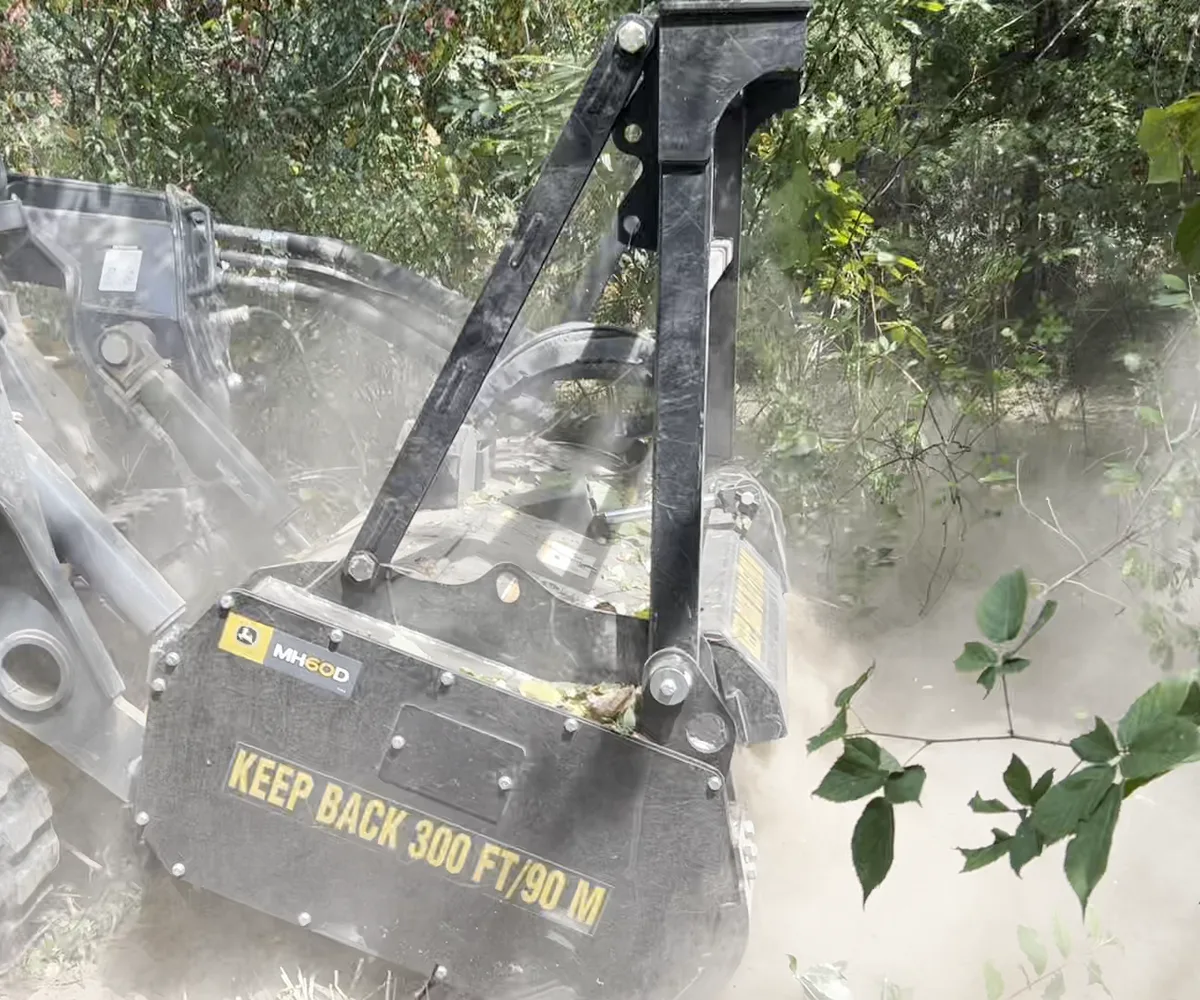
Fence lines are the most common call, and the most consequential. A fence you cannot walk is a fence you cannot inspect, and a fence with cedar growing through it is a fence that will be rebuilt rather than repaired. Mulching the line back to a workable edge makes the fence maintainable again and gives you room to run equipment down it.
Pasture reclamation is the higher-acreage version. Cedar shades out fescue and the stand thins underneath it; honeysuckle takes the shaded edges. Mulching in place rather than dozing matters here specifically because the sod stays intact — you are recovering a grass stand, not starting one over on bare dirt.
Ditch banks, waterways and the edges of creek draws are the third category, and they are where the mulch layer earns its keep. This is exactly the ground that will move in a hard rain if it is left bare, and mulching leaves cover on it rather than exposed soil.
Worth being straightforward about regrowth: bush honeysuckle and multiflora rose resprout from the stump. Cutting it buys back the use of the ground and makes any future visit far quicker, but permanent removal means either a follow-up or a herbicide program. Cedar does not resprout — once it is cut, that stem is finished.
Common Uses for Brush Clearing
- ✓Fence lines grown in with cedar and honeysuckle
- ✓Field edges that have crept into the field
- ✓Pasture losing its grass stand to cedar
- ✓Ditch banks, waterways and creek-draw edges
- ✓Overgrown lots and road frontage
- ✓Property lines that need to be walkable again
Why Choose Brush Clearing
Fence Lines Workable Again
The line is cleared back to an edge you can walk, inspect and run equipment down.
Sod Stays Intact
Mulching in place does not tear up the grass stand the way pushing brush does, which is the whole point on pasture.
Cover Left on Bank Ground
Ditch banks and creek draws keep a mulch layer instead of being left as bare soil ahead of the next rain.
Faster the Second Time
Once a line has been cleared, keeping it clear is a fraction of the first job.
Our Brush Clearing Process
We walk the lines and edges with you and agree on how far back the work goes.
You get an estimate based on what is actually standing rather than on linear feet alone.
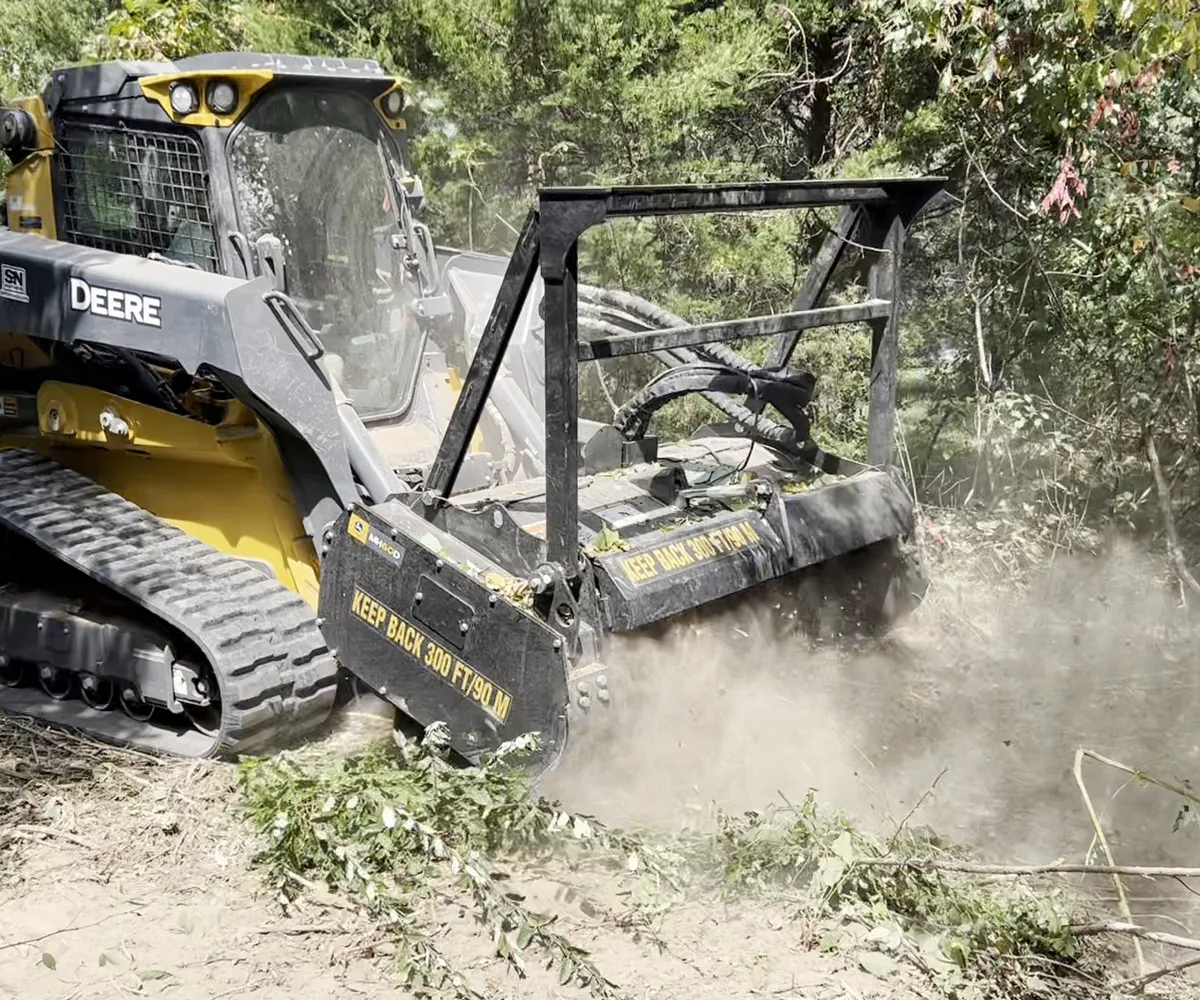
Material is cut and mulched in place, leaving the sod and root mat undisturbed.
We walk it with you before we load out.
Typical cost:
Exact pricing depends on your property. We provide free on-site estimates.
Brush Clearing FAQ
Common questions about brush clearing in Boone County and mid-Missouri.
Bush honeysuckle and multiflora rose resprout from the stump, so yes, without follow-up. Clearing it restores the use of the ground and makes any future visit much quicker. For permanent removal, plan on either a follow-up visit or a herbicide program — your local MU Extension office can advise on timing.
How close the machine can work to a fence, and whether it is worth clearing the far side at the same time, is one of the things settled at the walk-through. Bring anything you do not want touched to our attention there.
Mulching cuts and grinds standing material in place rather than pushing it, so the sod and root mat are left intact. That is the main reason it is used for pasture recovery instead of a dozer.
Whatever working width you want, within what the terrain allows. Most owners want enough to run a mower or a UTV down the line comfortably.
Related Services
Last updated
Ready for Brush Clearing?
Get a free, no-obligation estimate for your brush clearing project.
Serving Boone County and mid-Missouri · Estimates by appointment — call or text