Fire Break & Fuel Break Clearing in Mid-Missouri
Continuous fuel breaks mulched to the width your burn plan calls for — cut ahead of the burn window, not during it.
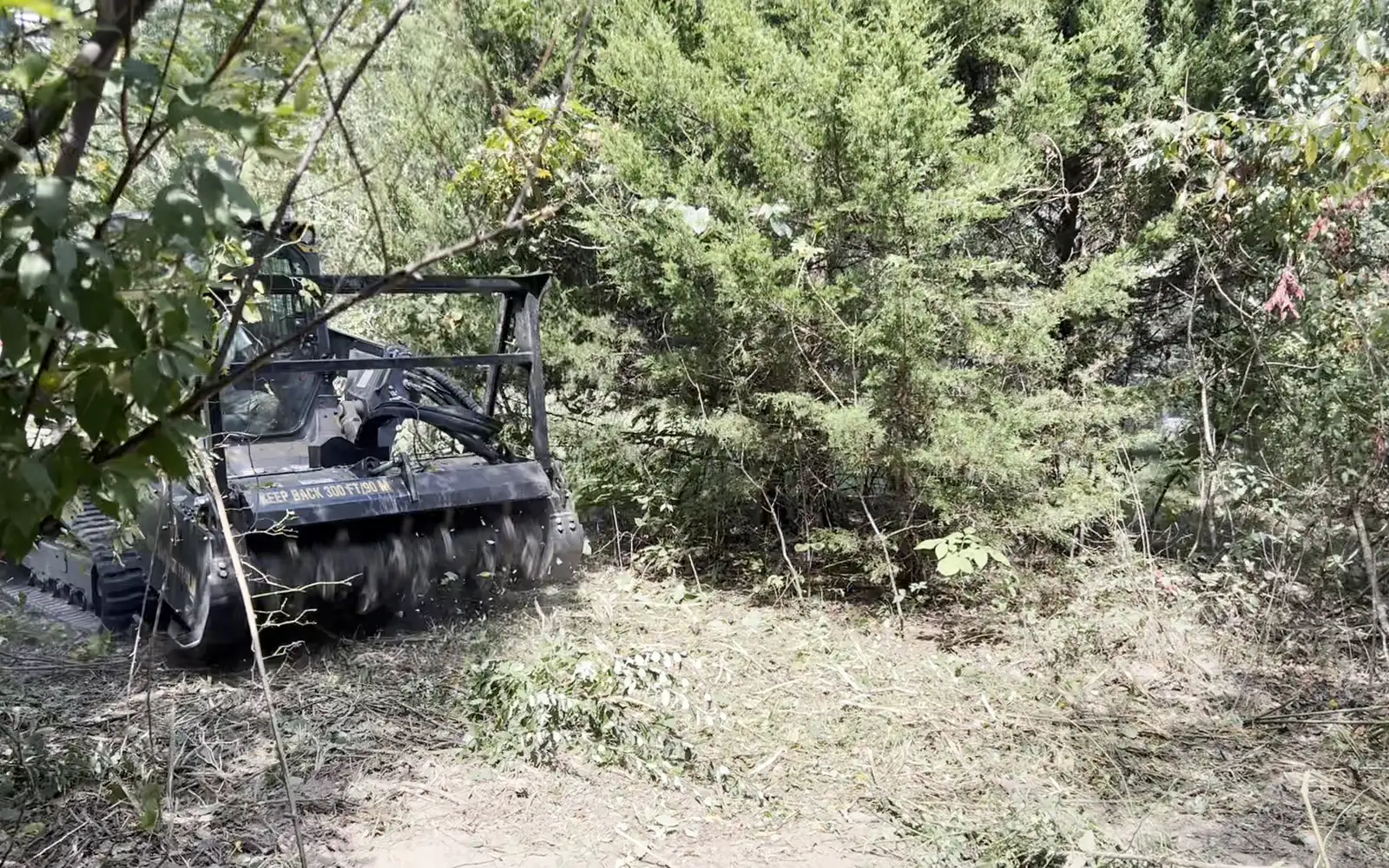
A fire break (or fuel break) is a cleared strip that interrupts continuous fuel, giving a prescribed burn a defined edge and giving a structure defensible space.
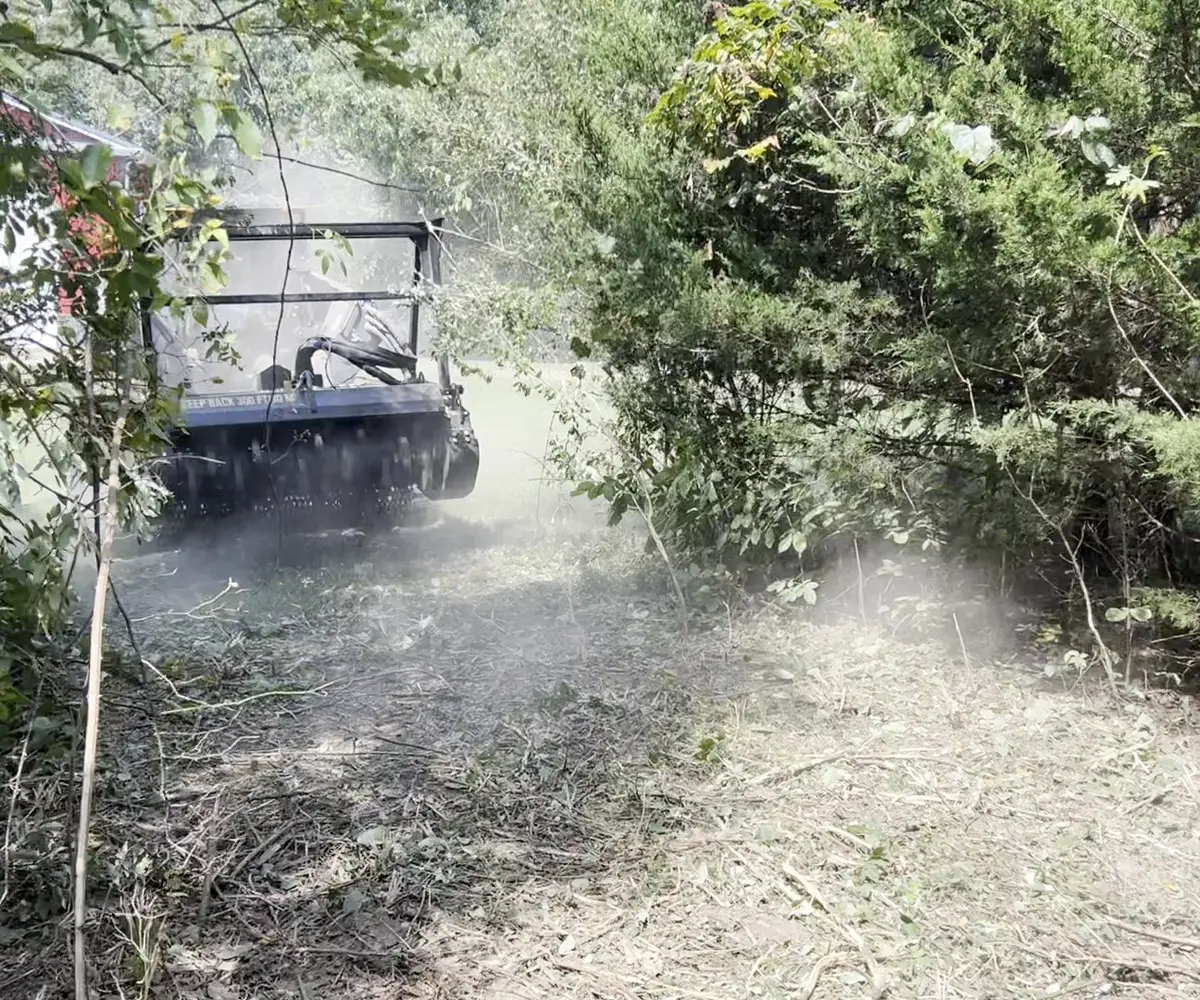
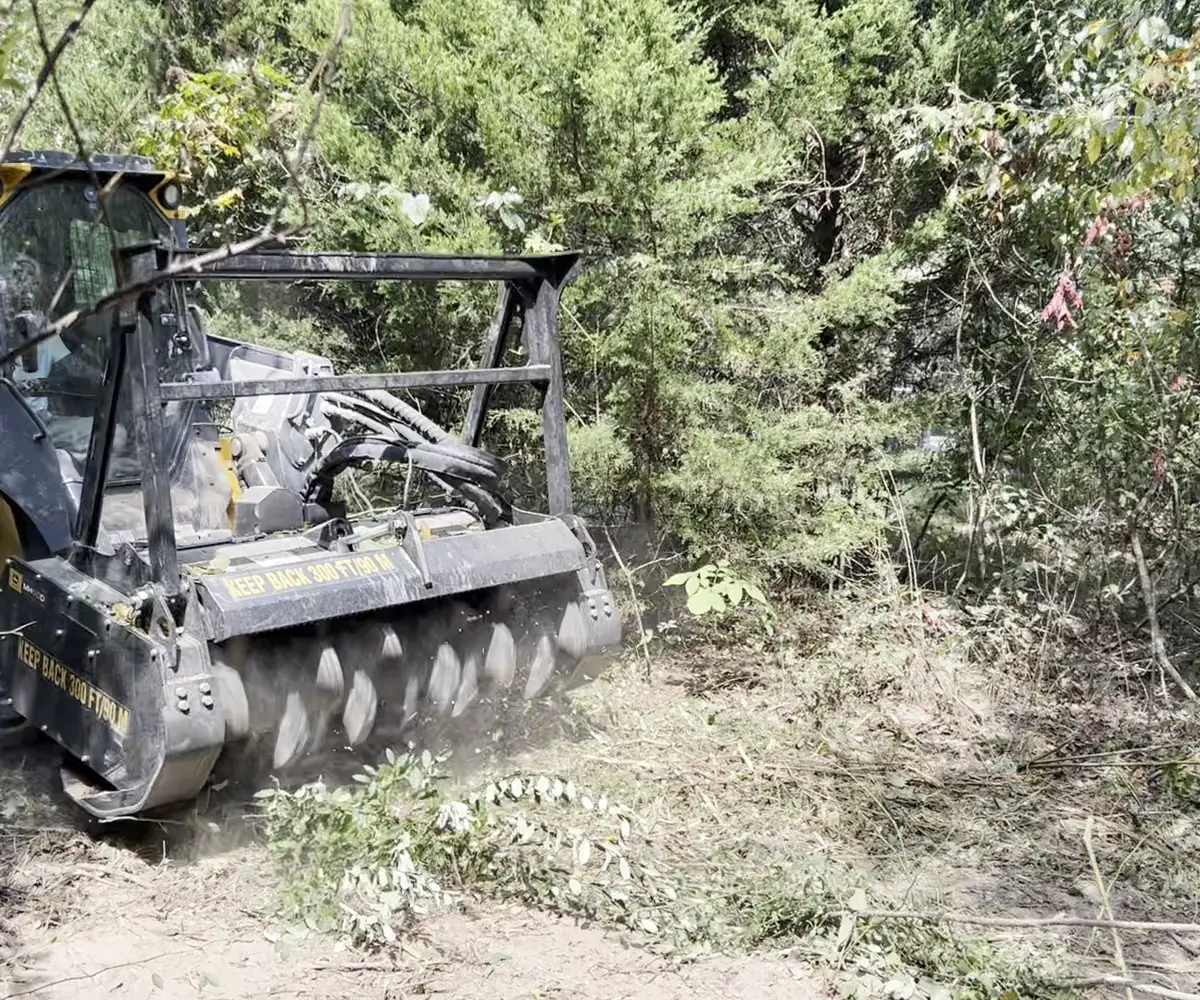
A fire break is a strip of ground cleared of burnable vegetation, used to stop or slow the spread of fire. Mulching creates a continuous break at a set width around structures, timber stands or property lines, and because the material is ground down rather than piled, no new fuel is left along the edge.
What a Fire Break Does
A prescribed burn is only as controlled as its edges. A fire break gives the burn a boundary it will hold at, and gives whoever is running it a place to work from. Around a house, barn or timber stand, the same strip serves as defensible space — a gap in continuous fuel that keeps a fire in the grass from becoming a fire in the structure.
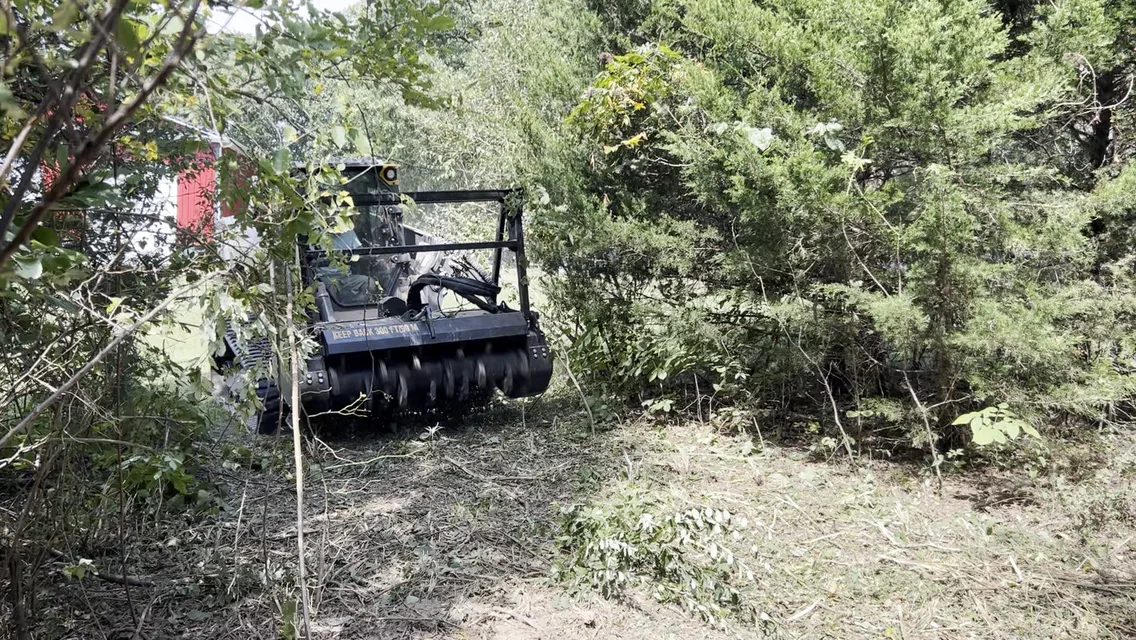
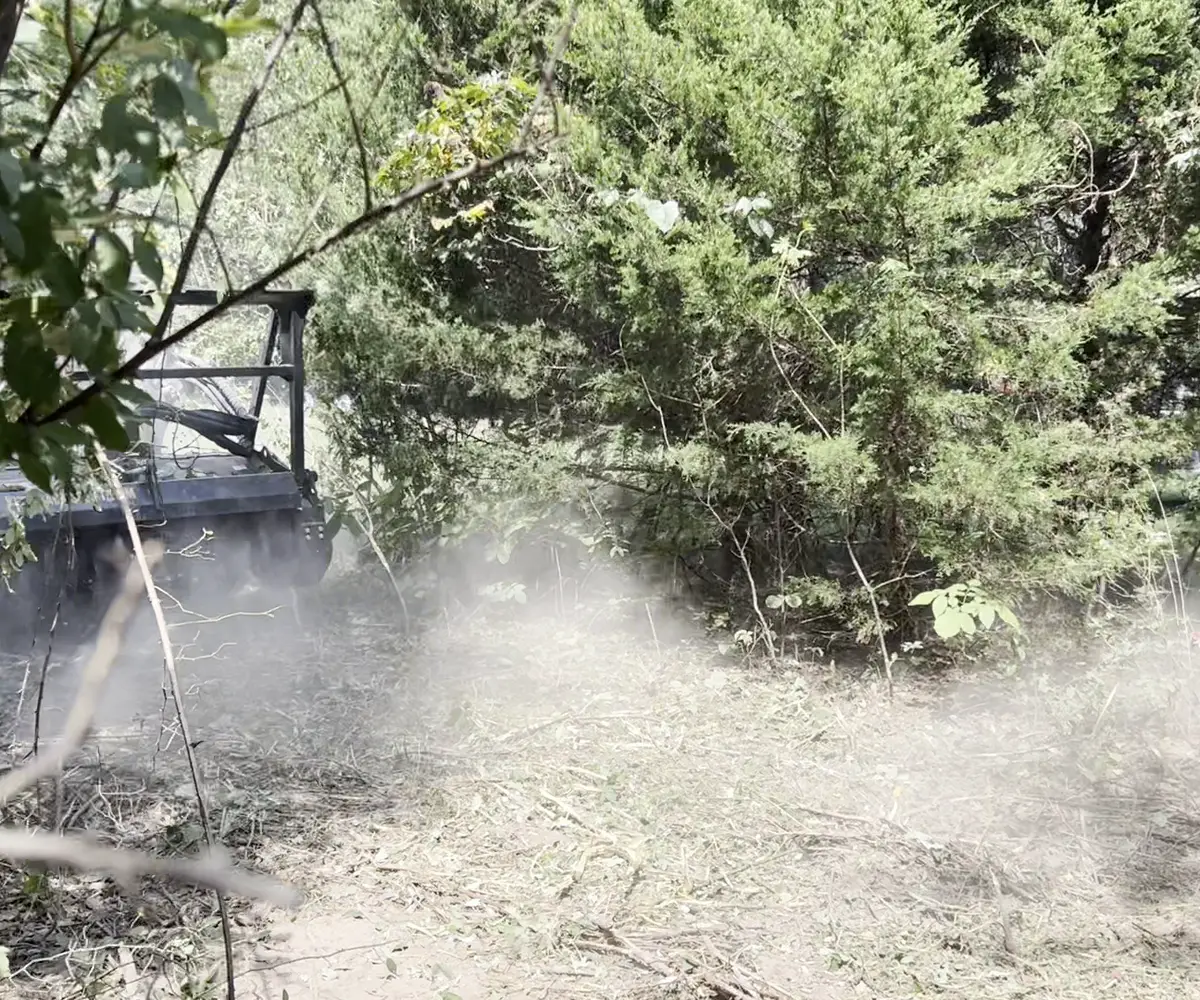
The critical detail with mulched breaks is that the removed material does not become a new problem. Cutting brush and windrowing it along the edge of a break produces a line of cured fuel exactly where you least want it. Mulching grinds the material down flat and distributes it, so the break is a break rather than a break with a fuel line beside it.
Width is a burn-plan question, not a preference. It depends on the fuel you are breaking, the slope, and the conditions you intend to burn under. If you are working with a burn contractor, the Missouri Department of Conservation, or an NRCS plan, they will specify a width — bring that number to the walk-through and the break is cut to it.
Timing is the part that most often goes wrong. Breaks want to be in place well before the burn window, not during it. Cutting a break in the same week you intend to burn means competing with the same weather that opens and closes the window, and leaves no margin if the ground is too wet to work.
Around structures the objective shifts from containment to defensible space. Here the break is about interrupting continuous fuel between grass or timber and the building, and the useful width is a function of what is growing and how the ground slopes toward the structure.
Common Uses for Fire Breaks
- ✓Perimeter breaks for prescribed burn units
- ✓Interior breaks dividing a burn into manageable units
- ✓Defensible space around houses, barns and outbuildings
- ✓Breaks along property lines and road frontage
- ✓Protection strips around planted timber stands
- ✓Breaks around equipment, fuel storage and hay
Why Choose Fire Breaks
No New Fuel Left Behind
Material is ground down flat rather than windrowed, so the break is not shadowed by a line of cured brush.
Cut to Your Burn Plan
Width is set from the plan your burn contractor, MDC or NRCS specifies, not from a default.
In Place Before the Window
Breaks are cut ahead of burn season so the work is not competing with the same weather as the burn.
Works Around Structures
The same operation creates defensible space where grass or timber runs up against a building.
Our Fire Breaks Process
We walk the burn unit or structure perimeter with you and, where there is one, your burn plan.
Break width and route are set from the plan and from what is actually growing on the line.
You get an estimate before anything is cut.
The break is mulched to a continuous width with the material ground flat rather than piled.
Typical cost:
Exact pricing depends on your property. We provide free on-site estimates.
Fire Breaks FAQ
Common questions about fire breaks in Boone County and mid-Missouri.
That comes from your burn plan — it depends on the fuel, the slope and the conditions you intend to burn under. If you are working with a burn contractor, MDC or NRCS, they will specify a width. Bring that number and the break is cut to it.
No. This is the clearing work that prepares the break. The burn itself is run by you or your burn contractor, under your plan and your permits.
Well ahead of the burn window. Cutting a break the same week you intend to burn leaves no margin for wet ground and competes with the same weather that decides whether you can burn at all.
It leaves a ground mulch layer rather than standing or piled fuel, which behaves very differently from cured brush. Where a break needs to be down to mineral soil, that is a different scope and worth raising at the walk-through.
Related Services
Last updated
Ready for Fire Breaks?
Get a free, no-obligation estimate for your fire breaks project.
Serving Boone County and mid-Missouri · Estimates by appointment — call or text